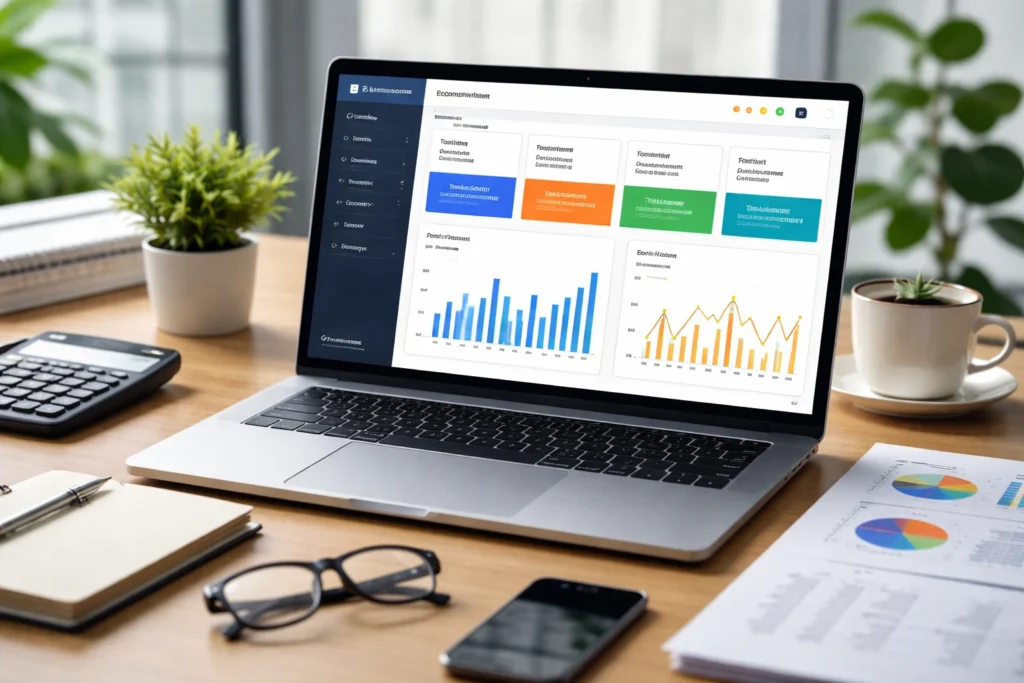

Running multiple business branches is exciting, but it also brings operational challenges. As companies grow, managing accounts, inventory, sales, payroll, and reporting manually becomes difficult. Therefore, businesses now rely on smart digital solutions to maintain accuracy and efficiency.
This is where Enterprise Accounting ERP Software plays a major role. It helps companies connect all branches into one centralized platform. As a result, business owners can monitor operations, track financial performance, and make faster decisions without confusion.
Whether you manage retail stores, pharmacies, factories, supermarkets, or wholesale businesses, ERP software can simplify your entire workflow. In this blog, we will explore the top features of Enterprise Accounting ERP Software for multi-branch companies and explain why it is essential for modern business growth.
What is Enterprise Accounting ERP Software?
Enterprise Accounting ERP Software is an integrated system that combines accounting, inventory, sales, purchasing, payroll, and reporting into one centralized platform.
Instead of using separate systems for different departments, businesses can manage everything from a single dashboard. Moreover, companies with multiple branches can monitor all locations in real time. Consequently, managers gain better visibility and stronger financial control.
Why Multi-Branch Companies Need ERP Software
As businesses expand, daily operations become more complex. For example, different branches may handle separate inventory levels, sales records, employees, and customer data. Without a centralized system, companies often face reporting delays, inventory mismatches, and accounting errors.
However, Enterprise Accounting ERP Software solves these problems effectively. It connects all branches into one unified system. Therefore, business owners can easily track operations and maintain consistent performance across all locations.
In addition, ERP software improves collaboration between departments and reduces manual work significantly.
Top Features of Enterprise Accounting ERP Software
1. Centralized Multi-Branch Management
One of the biggest advantages of Enterprise Accounting ERP Software is centralized branch management. Instead of handling each branch separately, businesses can manage everything from one platform.
For instance, managers can:
- Monitor branch-wise sales
- Track inventory movement
- Compare branch performance
- Review financial reports instantly
- Manage user permissions
As a result, decision-making becomes faster and more accurate.
2. Real-Time Financial Reporting
Financial reporting is essential for business growth. Therefore, ERP software provides real-time financial insights that help companies make informed decisions.
The system can generate:
- Profit and loss reports
- Balance sheets
- Expense summaries
- Cash flow statements
- Tax reports
- Branch-wise revenue analysis
Moreover, real-time reporting helps businesses identify financial issues quickly. Consequently, management can take immediate action before small problems become major losses.
3. Integrated Inventory Management
Managing inventory across multiple branches can become complicated. However, Enterprise Accounting ERP Software simplifies inventory control through centralized tracking.
Important inventory features include:
- Real-time stock monitoring
- Barcode integration
- Stock transfer between branches
- Low-stock alerts
- Batch and expiry management
- Warehouse tracking
Because of these features, businesses can reduce stock shortages and prevent overstocking.
4. Automated Accounting Processes
Manual accounting consumes time and often creates errors. Therefore, ERP software automates repetitive accounting tasks and improves operational efficiency.
Automation features may include:
- Invoice generation
- Expense recording
- Tax calculations
- Vendor payment tracking
- Bank reconciliation
- Financial closing reports
As a result, finance teams can focus more on strategic planning instead of manual data entry.
5. User Role & Access Control
Data security is extremely important for multi-branch companies. Therefore, Enterprise Accounting ERP Software allows administrators to assign role-based access to employees.
For example:
- Cashiers can access billing functions
- Managers can view reports
- Accountants can handle financial records
- Admins can manage complete operations
Consequently, businesses improve security and reduce unauthorized access to sensitive information.
6. Cloud-Based Accessibility
Modern ERP solutions offer cloud-based access, which allows businesses to manage operations remotely. In other words, owners can monitor branch activities anytime and from anywhere.
Cloud ERP benefits include:
- Remote accessibility
- Real-time synchronization
- Secure data backup
- Reduced IT costs
- Better scalability
- Improved system security
Additionally, cloud systems support business continuity during emergencies or remote work situations.
7. Tax & Compliance Management
Tax compliance is another major challenge for growing companies. Fortunately, Enterprise Accounting ERP Software simplifies tax management and supports compliance requirements.
The software may include:
- GST or VAT calculations
- FBR integration
- Digital invoicing
- Tax summaries
- Audit trails
- Compliance reports
Therefore, businesses can reduce errors and avoid unnecessary penalties.
8. CRM Integration
Strong customer relationships are essential for long-term success. Therefore, many ERP systems include CRM features that help businesses manage customer interactions more effectively.
CRM functions may include:
- Customer database management
- Sales tracking
- Loyalty programs
- Complaint handling
- Follow-up reminders
As a result, businesses can improve customer satisfaction and increase retention rates.
9. Payroll & HR Management
Managing employees across multiple branches requires proper coordination. Therefore, ERP software simplifies payroll and HR operations through automation.
Key HR features include:
- Attendance management
- Salary processing
- Leave tracking
- Employee performance records
- Payroll automation
- Department-wise reporting
Consequently, HR teams can save time and improve workforce management.
10. Advanced Analytics & Business Intelligence
Modern businesses rely heavily on data-driven decisions. Therefore, Enterprise Accounting ERP Software provides advanced analytics and business intelligence tools.
These dashboards can display:
- Sales performance
- Branch profitability
- Inventory trends
- Expense analysis
- Customer purchasing behavior
- Financial forecasts
Because of these insights, companies can identify growth opportunities and improve overall performance.
Benefits of Enterprise Accounting ERP Software
Improved Efficiency
Automation reduces repetitive tasks and increases operational speed. Therefore, employees can focus on more productive activities.
Better Decision-Making
Real-time reports provide accurate information. As a result, management can make smarter business decisions.
Enhanced Accuracy
Centralized systems reduce human errors and duplicate entries. Consequently, businesses maintain more reliable records.
Business Scalability
ERP software supports business expansion smoothly. Therefore, companies can add new branches without operational difficulties.
Stronger Data Security
Role-based access and cloud protection improve data security significantly.
Cost Reduction
Automated workflows reduce operational costs and improve overall productivity.
Industries That Benefit from ERP Software
Many industries use Enterprise Accounting ERP Software to improve branch management and operational control. These industries include:
- Retail businesses
- Pharmacies
- Manufacturing companies
- Supermarkets
- Restaurants
- Wholesale businesses
- Healthcare organizations
- Distribution companies
Because each industry handles large amounts of operational data, ERP systems help improve efficiency and reporting accuracy.
How to Choose the Right ERP Software
Before selecting ERP software, businesses should evaluate their operational needs carefully. In addition, they should focus on long-term scalability and support.
Important factors include:
- Multi-branch functionality
- Cloud support
- User-friendly interface
- Financial reporting tools
- Tax compliance features
- Integration capabilities
- Customer support services
- Scalability options
Therefore, choosing the right ERP solution can significantly improve business performance and future growth.
Final Thoughts
Managing multiple branches manually can slow business growth and create unnecessary operational problems. However, Enterprise Accounting ERP Software helps businesses centralize operations, automate accounting tasks, and improve financial visibility.
With features like real-time reporting, inventory tracking, payroll management, cloud accessibility, and advanced analytics, ERP software provides complete operational control for growing companies.
As competition continues to increase, businesses must adopt smart digital solutions to stay ahead. Therefore, investing in reliable ERP software is a strategic decision that improves efficiency, accuracy, and long-term scalability.
At NodeX, we provide smart and scalable Enterprise Accounting ERP Software solutions designed to help multi-branch companies streamline operations, improve financial control, and grow with confidence. Contact us today to transform your business with intelligent ERP technology.